25 Instagram Post Ideas for Couples Therapists
Educational relationship content that stays clinically responsible — 2026 edition
Most therapists don't lack expertise — they don't know what to post. These 25 Instagram post ideas for couples therapists teach communication concepts, explain therapy and correct misconceptions, each with post text you can copy and adapt responsibly.
10 free posts · No credit card required
Key takeaways
- Teach concepts (repair attempts, boundaries, emotional vocabulary) rather than giving individual advice.
- Explain the process — first appointment, what therapy isn't — to lower the barrier to booking.
- Describe behaviors without blaming either partner.
- Social-media content cannot replace individualized assessment or therapy; say so where relevant.
- End with a soft CTA that encourages speaking with a qualified therapist.
Why I wrote this list. I run Maxolot, an Instagram post generator for small businesses. Therapists often tell me the hard part isn't knowledge — it's turning careful, responsible ideas into posts every week. Each idea below comes with text to adapt, and you stay in charge of clinical appropriateness.
Turn one therapy topic into a week of posts. Maxolot suggests the topic, writes the post and designs it in your practice's colors — you review every word.
What good couples therapy content does
Couples therapy content should be approachable enough to help people understand relationships, but it should never reduce complex relationship problems to simplistic Instagram advice.
The strongest content teaches communication concepts, explains therapy, challenges common misconceptions and encourages appropriate professional support.
If your practice also offers hypnotherapy, see the Instagram post ideas for hypnotherapists; for more formats across industries, browse the Instagram post ideas hub.
25 Instagram post ideas for couples therapists
Each idea includes the best format, its content pillar and ready-to-copy text. Keep examples general and anonymized, and adjust wording to your professional standards.
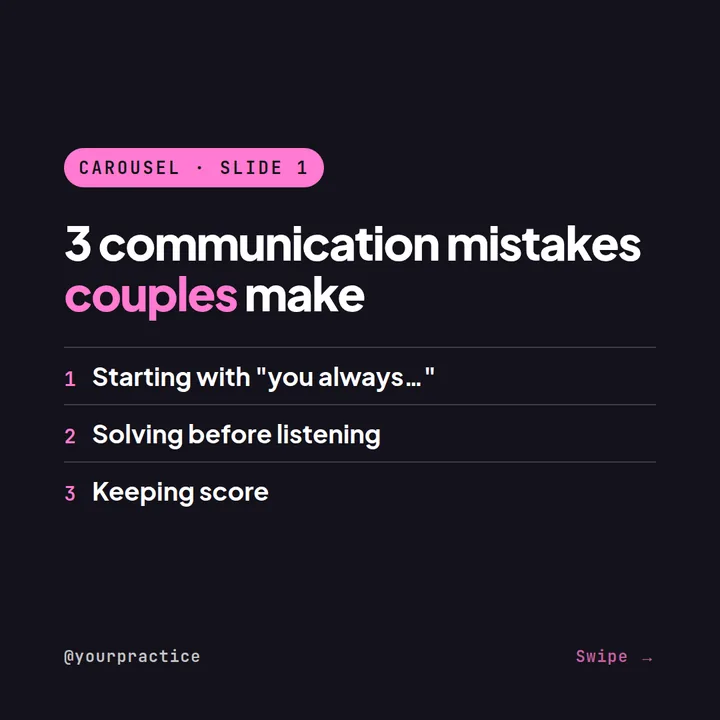
1. 3 communication mistakes couples make
Explain the behavior rather than blaming either partner.
2. How-to: start a difficult conversation
Provide a general communication framework.
3. Book recommendation
Recommend a reputable relationship book and explain who it might help.
4. Question
Ask about communication habits people wish they had learned.
5. Quiz
"Which response is most likely to keep a difficult conversation productive?"
6. Riddle
"What gets bigger when both people stop listening?" Answer: the misunderstanding.
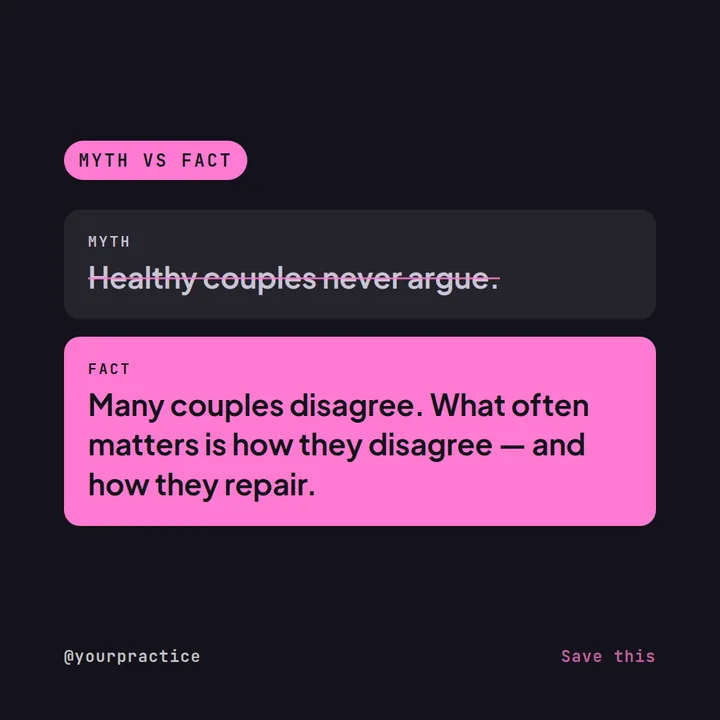
7. Conflict myth
Explain why "never argue" isn't necessarily a useful goal.
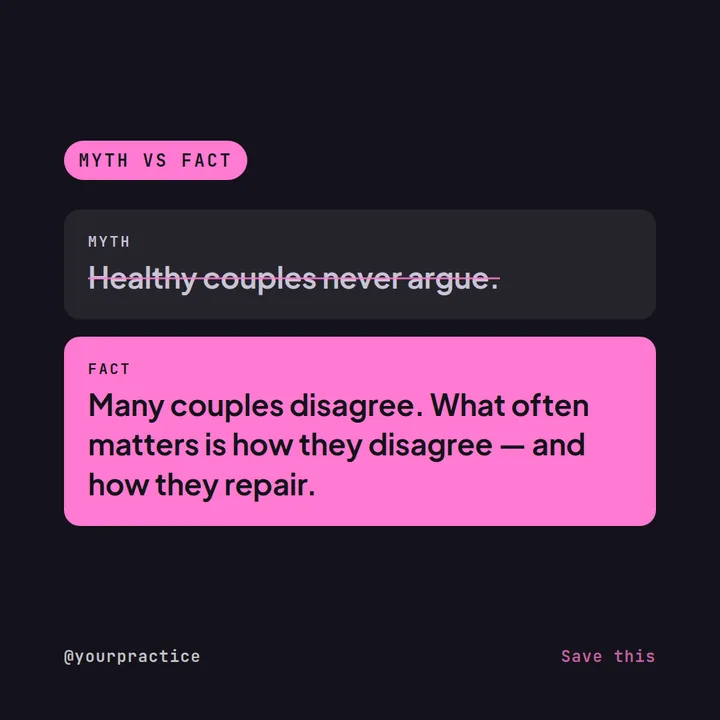
8. Repair attempt post
Explain the concept of trying to de-escalate or repair a conflict.
9. Listening hack
Give a simple active-listening technique.
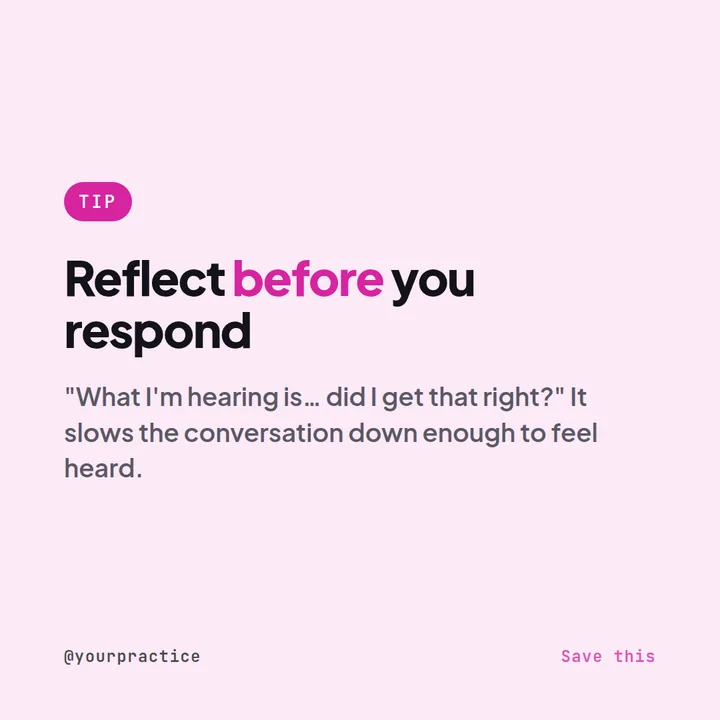
10. Joke
Couple: "We never argue." Therapist: "Interesting." Use it to discuss healthy communication without universal claims.
11. Therapy FAQ
Explain what happens during an initial appointment.
12. What therapy isn't
Clarify misconceptions.
13. Conversation starter
Give couples a question they can discuss together.
14. Appreciation challenge
Suggest a practical relationship-building exercise.
15. Boundary education
Explain what boundaries are and aren't.
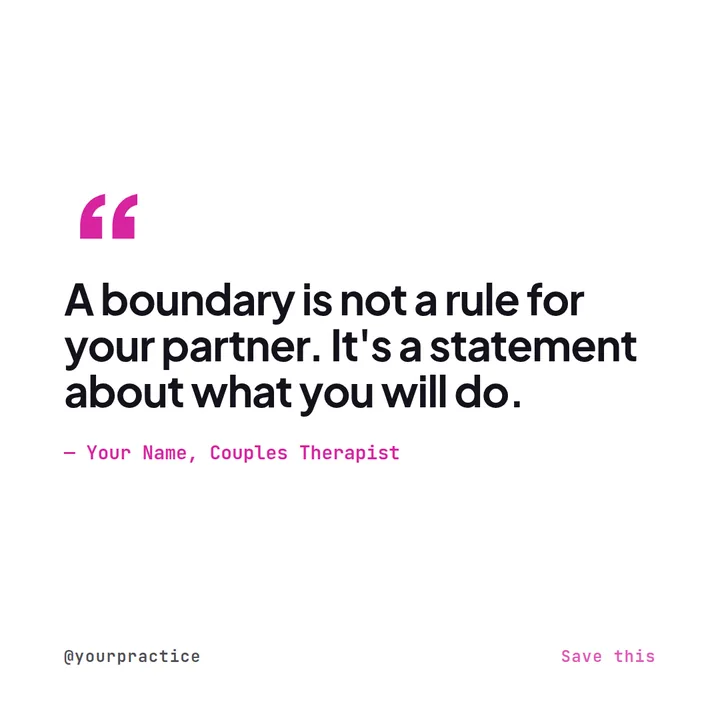
16. Emotional vocabulary
Teach words for identifying emotions.
17. Client question
Anonymize and generalize a question you've heard professionally.
18. Book recommendation (monthly list)
Create a monthly relationship reading list.
19. 3 mistakes during arguments
Keep the content educational rather than diagnostic.
20. How-to repair after conflict
Give general steps.
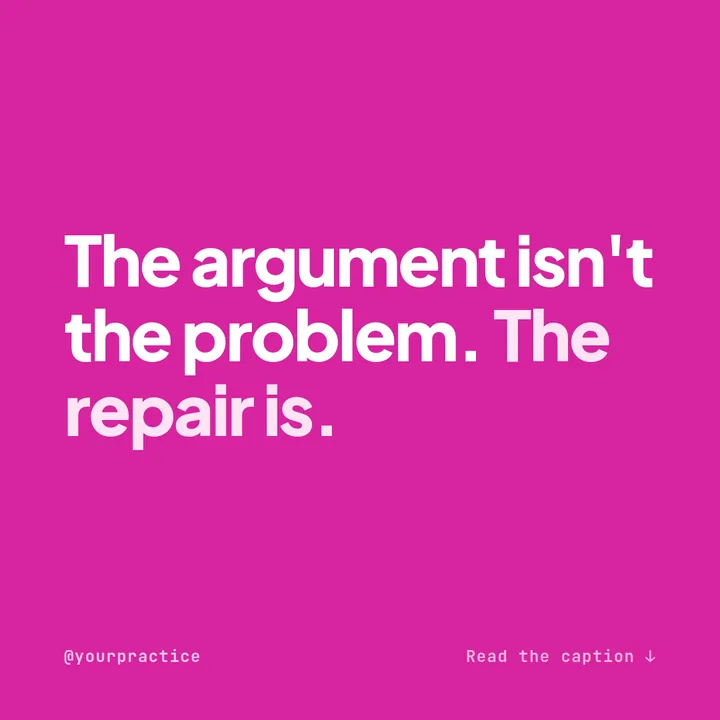
21. Quiz (communication scenario)
Create a communication scenario and ask followers what they would say.
22. Local therapist guide
"How to choose a couples therapist in [City]."
23. Behind the scenes
Explain your professional approach and environment.
24. Question (topics)
"What's one relationship topic you wish people talked about more?"
25. Soft CTA
"If communication problems are affecting your relationship, consider speaking with a qualified therapist about your circumstances."
All 25 ideas at a glance
Use the pillar column to balance your month: mix educational and engagement posts with occasional service and brand-trust posts rather than publishing the same type every day.
| # | Post idea | Format | Content pillar |
|---|---|---|---|
| 1 | 3 communication mistakes couples make | Carousel | Educational |
| 2 | How-to: start a difficult conversation | Carousel | Educational |
| 3 | Book recommendation | Single image | Educational |
| 4 | Question | Single image | Engagement |
| 5 | Quiz | Carousel | Engagement |
| 6 | Riddle | Single image | Engagement |
| 7 | Conflict myth | Single image | Educational |
| 8 | Repair attempt post | Carousel | Educational |
| 9 | Listening hack | Single image | Educational |
| 10 | Joke | Single image | Engagement |
| 11 | Therapy FAQ | Carousel | Service / offer |
| 12 | What therapy isn't | Carousel | Educational |
| 13 | Conversation starter | Story | Engagement |
| 14 | Appreciation challenge | Carousel | Engagement |
| 15 | Boundary education | Single image | Educational |
| 16 | Emotional vocabulary | Carousel | Educational |
| 17 | Client question | Carousel | Educational |
| 18 | Book recommendation (monthly list) | Carousel | Educational |
| 19 | 3 mistakes during arguments | Carousel | Educational |
| 20 | How-to repair after conflict | Carousel | Educational |
| 21 | Quiz (communication scenario) | Single image | Engagement |
| 22 | Local therapist guide | Carousel | Service / offer |
| 23 | Behind the scenes | Carousel | Brand & trust |
| 24 | Question (topics) | Story | Engagement |
| 25 | Soft CTA | Single image | Service / offer |
Six factual foundations for therapy content
- The American Psychological Association provides resources explaining relationship and mental-health topics.Source: American Psychological Association
- The NHS provides information about talking therapies and accessing psychological support.Source: NHS
- Couples therapy is not a universal solution for every relationship situation.
- Relationship problems can involve communication, conflict, stress, individual mental health and other factors.
- Social-media content cannot replace individualized assessment or therapy.
- Mental-health professionals should avoid presenting general educational posts as diagnoses or individualized treatment.
Turn one therapy topic into multiple posts
"How to have a difficult conversation" can become a 5-step carousel, quiz, three-mistakes post, Reel, question and book recommendation.
Maxolot can generate the first Instagram design for free. The therapist remains responsible for checking language and clinical appropriateness.
- Choose one educational topic. Pick a general communication concept, such as starting a difficult conversation.
- Generate several formats. Use Maxolot to create a carousel, quiz and question post from the same topic.
- Review for clinical appropriateness. Check every statement, remove anything that reads as diagnosis, and publish.
Maxolot writes it in a calm, professional tone and your colors — you approve every word.
Frequently asked questions
What should a couples therapist post on Instagram?
Can therapists share client stories on Instagram?
How do therapists avoid giving advice on Instagram?
How often should a couples therapist post?
Which formats work best for therapy content?
Is there a free tool to create therapy Instagram posts?
Final takeaway
The goal isn't to solve someone's relationship in six slides. It's to give people a useful insight, reduce confusion and show them what professional support can look like.
Maxolot can handle the drafting and design so your time stays with clients.
This article is about marketing, not clinical guidance. Example posts are general educational starting points; adapt them to your professional and ethical standards.