25 Instagram Post Ideas for Language Schools
Mini lessons, quizzes and phrases learners actually save — 2026 edition
Most language schools don't lack material — they don't know what to post. These 25 Instagram post ideas for language schools turn expressions, pronunciation, vocabulary and common mistakes into mini lessons, each with a ready-to-copy example.
10 free posts · No credit card required
Key takeaways
- Language itself is content — every lesson plan can become several posts.
- Quizzes and "which sentence is correct?" posts invite comments because learners want to test themselves.
- Recurring series (word of the week) give followers a reason to come back.
- Anchor posts in your city for local reach: "10 phrases you'll hear in [City]."
- Your Instagram should feel like a free mini language lesson, not an advertisement for classes.
Why I wrote this list. I run Maxolot, an Instagram post generator for small businesses. Language schools have more content than almost anyone — it's already in the lesson plans. Each idea below includes a ready-to-copy example, so a lesson becomes a post in minutes.
Turn today's lesson plan into this week's posts. Maxolot suggests the topic, writes the post and designs it in your school's colors.
Why language schools have an advantage on Instagram
A language school has an enormous advantage on Instagram: language itself is content.
Everyday expressions, pronunciation, vocabulary, cultural differences, common mistakes, quizzes and mini-lessons can all become posts.
Many of these work as single Instagram text posts — no photo shoot required. For other industries' formats, see the Instagram post ideas hub.
25 Instagram post ideas for language schools
Examples below use English, but every format works for any language you teach. Each idea includes the best format, its content pillar and ready-to-copy text.
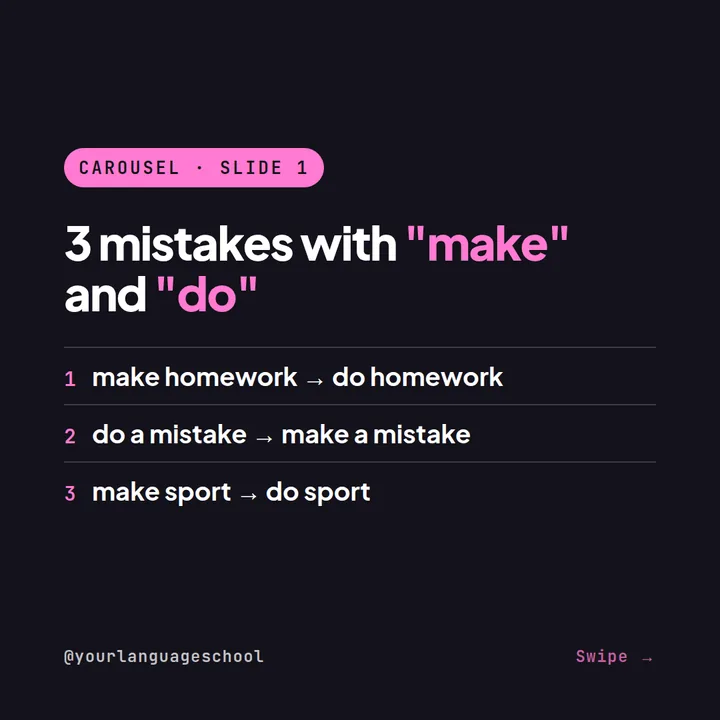
1. 3 common mistakes
"3 mistakes English learners make with 'make' and 'do'."
2. How-to lesson
"How to introduce yourself professionally in English."
3. Book recommendation
Recommend a book appropriate to the learner's level and give three reasons to read it.
4. Vocabulary quiz
Show five words and ask followers to choose the correct definition.
5. Pronunciation challenge
Record one difficult sound and give three examples.
6. Riddle
Create a simple riddle in the target language.
7. Translation challenge
"How would you say this naturally in English?" Give three options.
8. False friends
Explain words that look similar across languages but have different meanings.
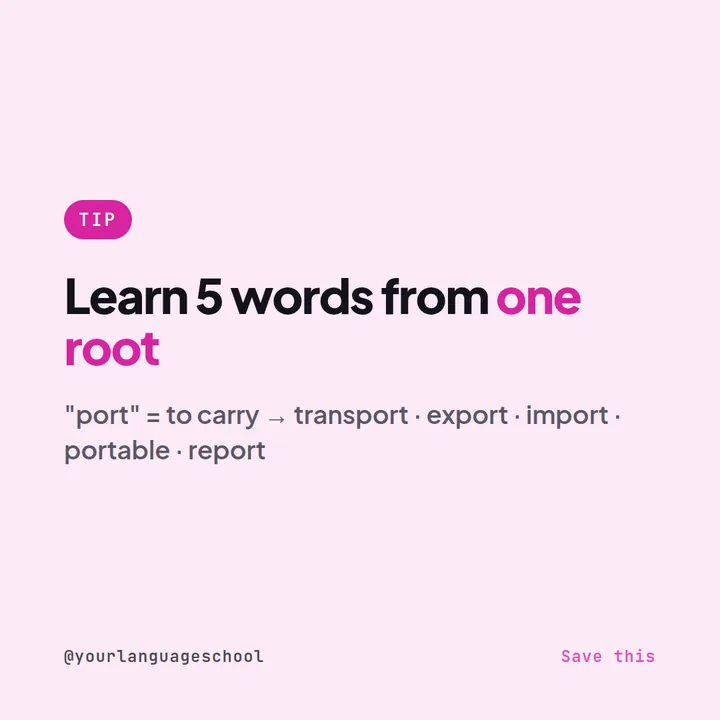
9. Language hack
"Learn five new words using one root."
10. Joke
Share a simple language-learning joke.
11. Question
"What's the hardest word for you to pronounce?"
12. Mini grammar lesson
Explain one grammar rule in a single carousel.
13. Before-and-after sentence
Show a basic sentence and a more natural alternative.
14. Cultural lesson
Explain a cultural expression or custom.
15. Listening challenge
Post a short clip and ask followers what they heard.
16. Student success story
Tell a learner's progress story without exaggerating results.
17. Teacher introduction
Introduce one teacher and explain their teaching philosophy.
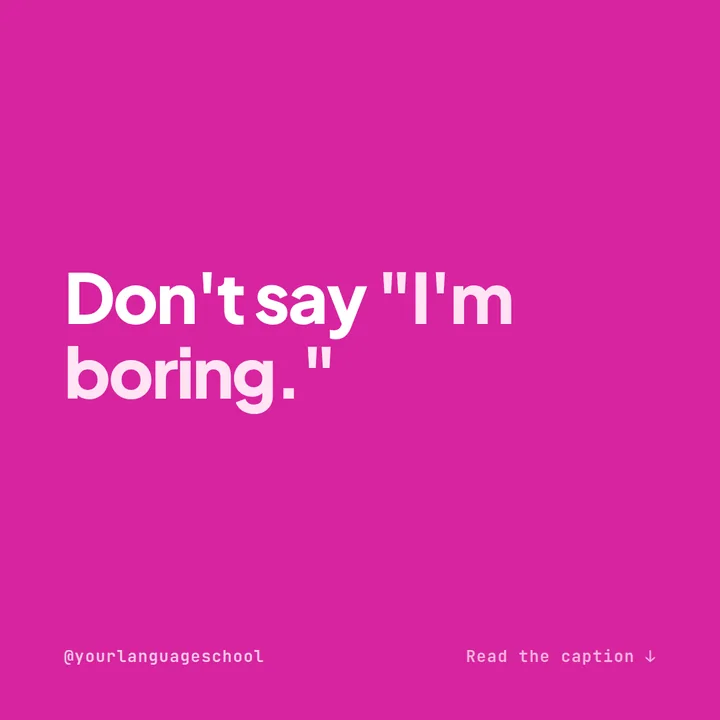
18. "Don't say this"
Show a common learner mistake and provide a natural alternative.
19. Five useful phrases
Create a travel, business or everyday-language carousel.
20. Word of the week
Turn it into a recurring series.
21. Local language guide
For a school in Paris, London, Madrid, Berlin or another city, create "10 phrases you'll hear in [City]."
22. Quiz: which sentence is correct
"Which sentence is correct?" A. I have 25 years. B. I am 25 years old.
23. Riddle (multiple meanings)
Use a word with multiple meanings and ask learners to guess it.
24. How to study
Give learners a practical weekly study routine.
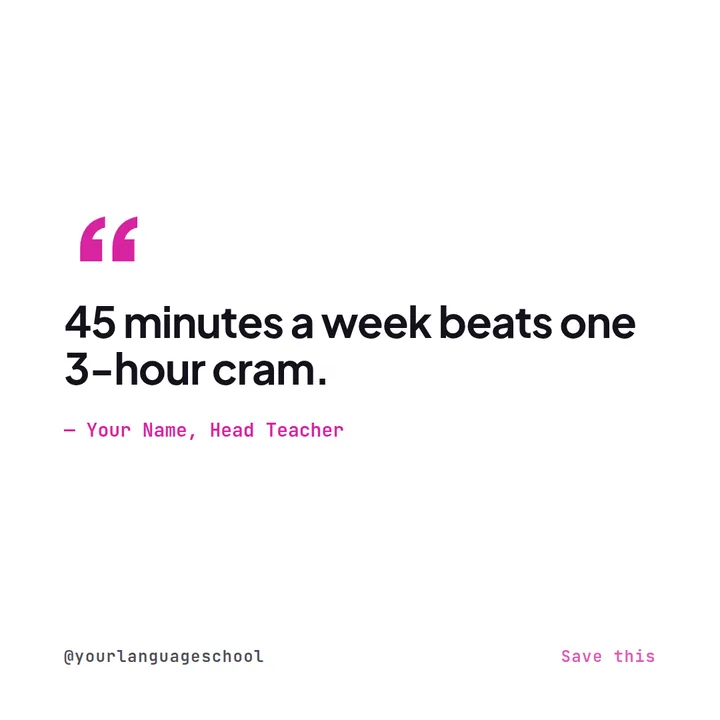
25. Course CTA
"Want to practice this with a teacher? Explore our classes in [City] or online."
All 25 ideas at a glance
Use the pillar column to balance your month: mix educational and engagement posts with occasional service and brand-trust posts rather than publishing the same type every day.
| # | Post idea | Format | Content pillar |
|---|---|---|---|
| 1 | 3 common mistakes | Carousel | Educational |
| 2 | How-to lesson | Carousel | Educational |
| 3 | Book recommendation | Single image | Educational |
| 4 | Vocabulary quiz | Carousel | Engagement |
| 5 | Pronunciation challenge | Reel | Engagement |
| 6 | Riddle | Single image | Engagement |
| 7 | Translation challenge | Single image | Engagement |
| 8 | False friends | Carousel | Educational |
| 9 | Language hack | Carousel | Educational |
| 10 | Joke | Single image | Engagement |
| 11 | Question | Story | Engagement |
| 12 | Mini grammar lesson | Carousel | Educational |
| 13 | Before-and-after sentence | Single image | Educational |
| 14 | Cultural lesson | Carousel | Educational |
| 15 | Listening challenge | Reel | Engagement |
| 16 | Student success story | Carousel | Brand & trust |
| 17 | Teacher introduction | Single image | Brand & trust |
| 18 | "Don't say this" | Single image | Educational |
| 19 | Five useful phrases | Carousel | Educational |
| 20 | Word of the week | Single image | Educational |
| 21 | Local language guide | Carousel | Service / offer |
| 22 | Quiz: which sentence is correct | Single image | Engagement |
| 23 | Riddle (multiple meanings) | Single image | Engagement |
| 24 | How to study | Carousel | Educational |
| 25 | Course CTA | Single image | Service / offer |
Six factual foundations for language-learning content
- The CEFR provides a widely used framework for describing language proficiency from A1 through C2.Source: Council of Europe
- The CEFR provides a common basis for language syllabuses, curriculum guidelines and assessment.Source: Council of Europe
- The British Council provides extensive English-learning resources covering grammar, vocabulary, listening and other skills.Source: British Council LearnEnglish
- Cambridge English provides learning and assessment resources for English learners and teachers.Source: Cambridge English
- Language proficiency involves multiple skills, including listening, reading, speaking and writing.
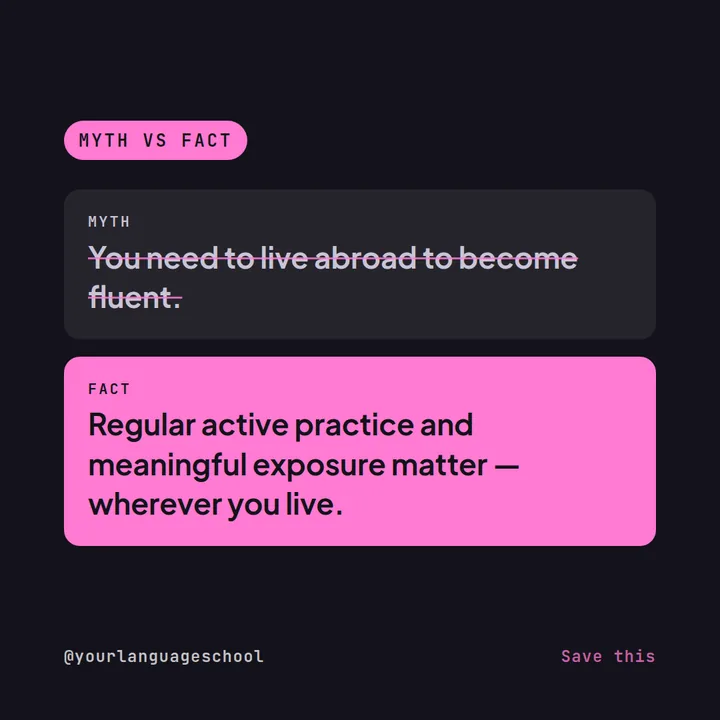
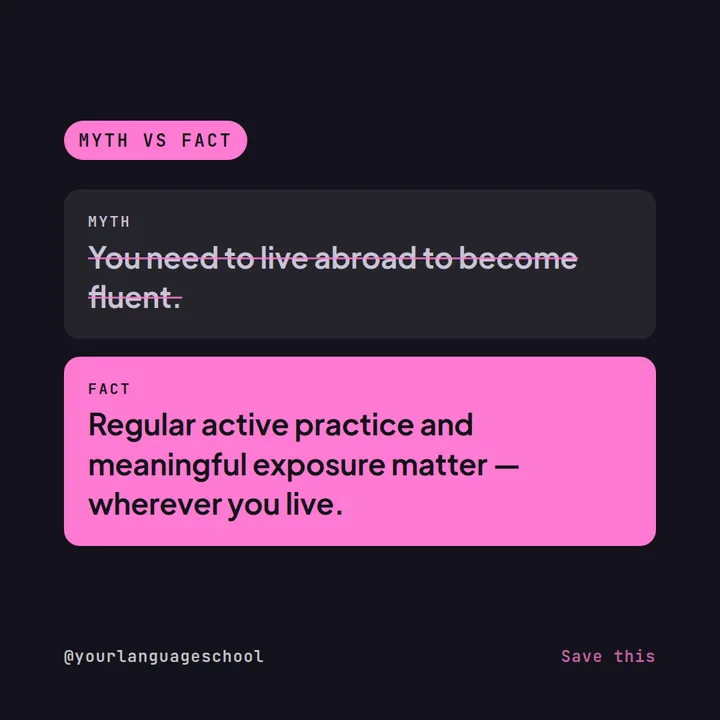
- Active practice and meaningful exposure are important components of language learning.
Create a month's content from your lesson plans
A lesson about travel vocabulary can become a vocabulary post, quiz, pronunciation post, common-mistakes carousel, mini test and joke.
You can turn an idea into a branded Instagram design with Maxolot for free — no credit card for the first 10 posts.
- Pick one lesson topic. For example, travel vocabulary or since vs for.
- Split it into formats. Create a vocabulary post, quiz, pronunciation post, mistakes carousel and joke from the same lesson.
- Generate, brand and schedule. Use Maxolot to write and design each post in your colors, then schedule them across the month.
Maxolot writes the post and designs it in your school's colors in under a minute.
Frequently asked questions
What should a language school post on Instagram?
Which language posts get the most comments?
How often should a language school post?
Should posts be in the target language or the learner's language?
Can I share student success stories?
Is there a free tool to create language school posts?
Final takeaway
Your language school's Instagram shouldn't feel like an advertisement for classes. It should feel like a free mini language lesson.
If you'd rather teach than design, Maxolot turns the lesson into the post.
Examples are illustrative. Check language examples for accuracy at your learners' level, and share student stories only with permission.