25 Instagram Post Ideas for Nutritionists
Practical, evidence-based posts that stand out from generic food content — 2026 edition
Most nutritionists don't lack expertise — they don't know what to post. These 25 Instagram post ideas for nutritionists answer specific questions and explain practical choices — beyond another salad photo — each with post text you can copy.
10 free posts · No credit card required
Key takeaways
- Generic food photos don't stand out; specific, useful answers do.
- Use credible sources — WHO, NHS, Dietary Guidelines for Americans, Harvard T.H. Chan — for factual claims.
- Individual needs differ, so don't present general posts as personalized medical care.
- Focus on sustainable behaviors rather than extreme dieting.
- One topic, such as reading a nutrition label, can become six different posts.
Why I wrote this list. I run Maxolot, an Instagram post generator for small businesses. Nutrition professionals have the expertise — what they lack is time to turn it into consistent posts. Every idea below includes text to adapt, and you check the science.
Evidence-based nutrition posts, written and designed for you. Maxolot suggests the topic, writes the post and designs it in your colors — you review the science.
How nutritionists can stand out on Instagram
Nutrition content is everywhere on Instagram. That makes it difficult to stand out.
Posting another generic picture of a salad isn't enough.
A better strategy is to create content that answers specific questions, explains nutrition concepts and helps people understand practical choices. Many of these work as simple Instagram text posts — no food styling required. For other industries, see the Instagram post ideas hub.
25 Instagram post ideas for nutritionists
Each idea includes the best format, its content pillar and ready-to-copy text. Check claims against current guidance before posting. For misconception posts, see the myth vs fact format guide.
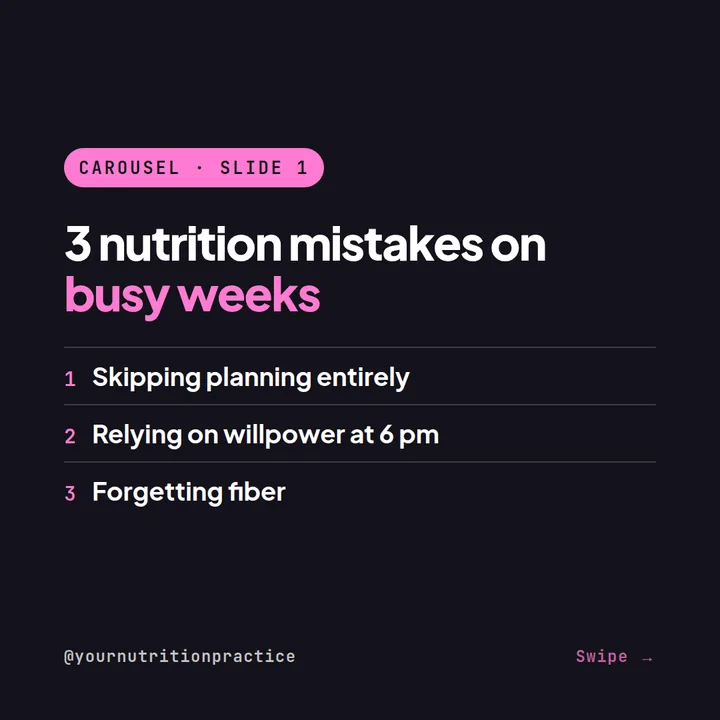
1. 3 common nutrition mistakes
Choose three evidence-based, audience-specific mistakes.
2. How-to meal planning guide
Show how to plan a simple week of meals.
3. Book recommendation
Recommend a credible nutrition book and explain what readers can learn from it.
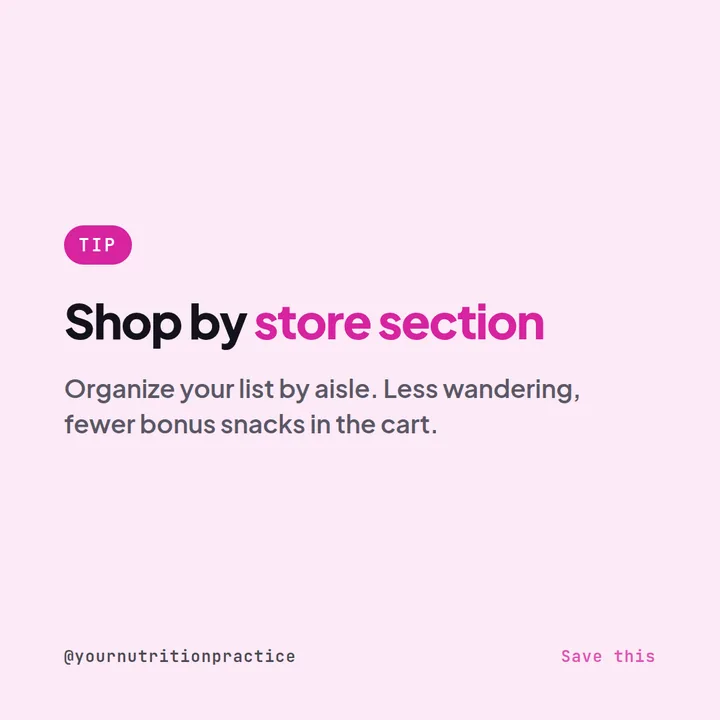
4. Grocery shopping hack
Give one practical strategy.
5. Nutrition quiz
"Which food contains more protein?" Explain the answer.
6. Riddle
"I'm essential to your body, but your body can't make enough of me. What am I?" Use the answer to introduce an evidence-based lesson.
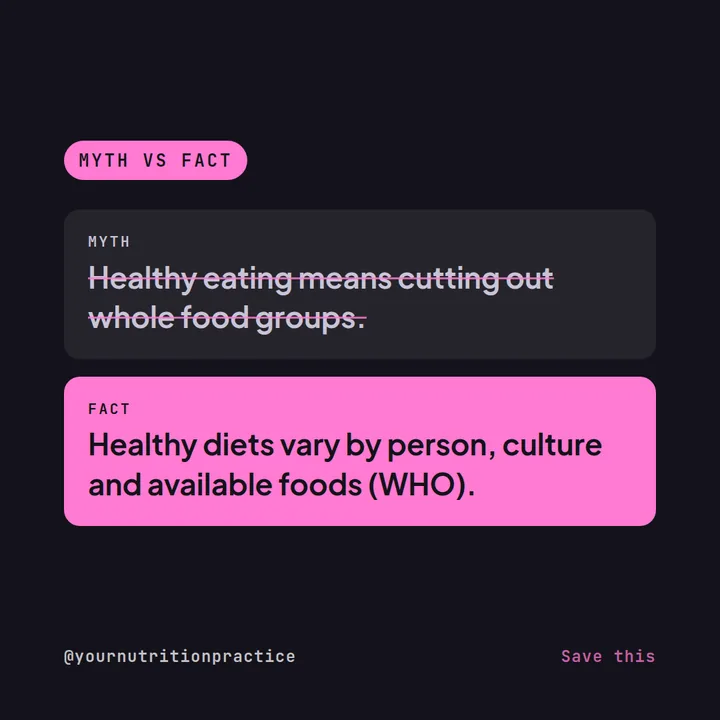
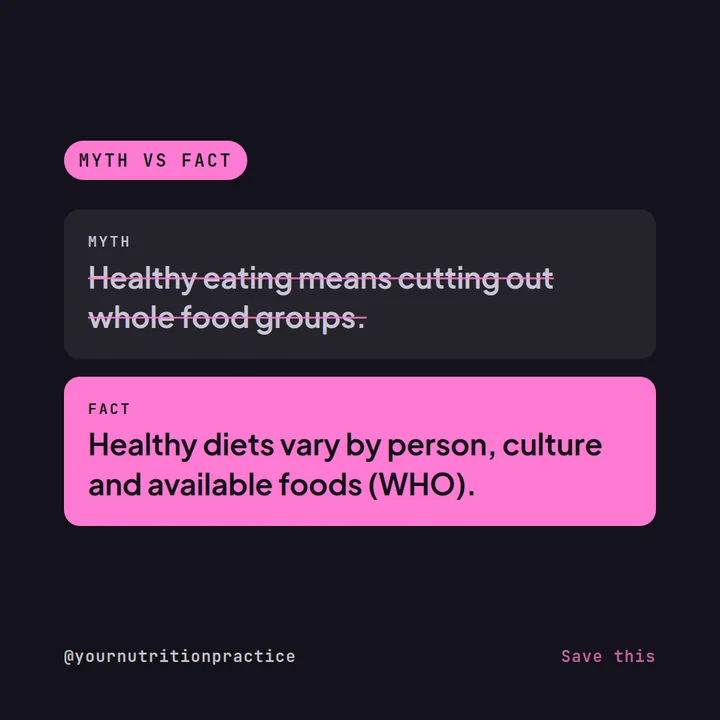
7. Myth vs fact
Choose one nutrition claim and explain the evidence.
8. Recipe breakdown
Show how you build a balanced meal.
9. Food-label guide
Explain how to read a nutrition label.
10. Joke
"Me: I'll just buy one snack. Also me: leaves the supermarket with seven." Then provide a practical shopping tip.
11. Question
"What's the hardest part of eating well during a busy week?"
12. Protein explainer
Explain why protein is important without prescribing individualized amounts unless appropriately qualified.
13. Fiber guide
Explain food sources and general benefits.
14. Hydration post
Give evidence-based general information.
15. Meal-prep checklist
Create a saveable carousel.
16. What I eat — professionally framed
If sharing personal food choices, distinguish personal experience from universal advice.
17. Client FAQ
Answer common questions you hear professionally.
18. Seasonal produce
Create a local seasonal-food guide.
19. Food myth
Choose one widespread misconception.
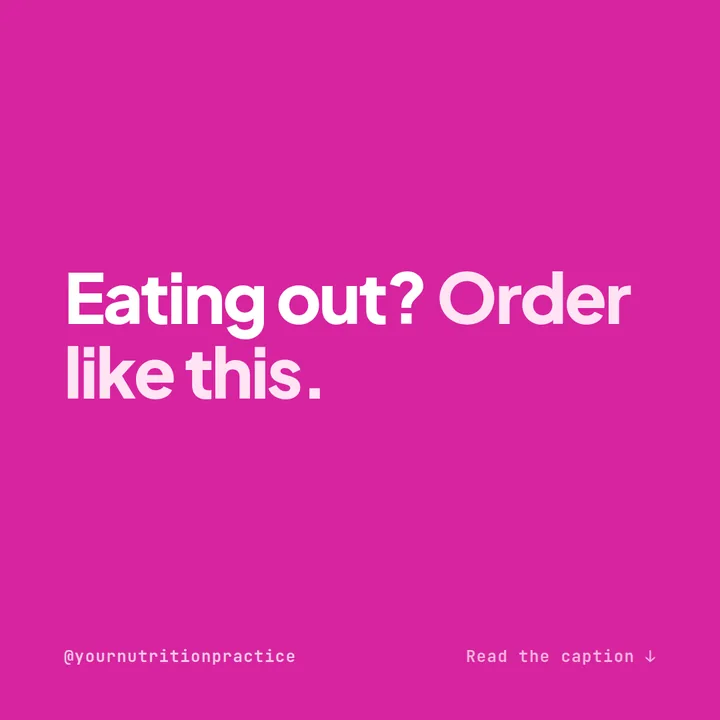
20. Restaurant guide
"How to make a balanced choice when eating out."
21. 5 easy breakfast ideas
Make them practical and accessible.
22. Quiz: food labels
Create a food-label or nutrition knowledge test.
23. Book recommendation (monthly list)
Create a monthly evidence-based reading list.
24. 3 mistakes when starting a nutrition plan
Focus on sustainable behaviors rather than extreme dieting.
25. Soft CTA
"If you want advice based on your individual circumstances, speak with a qualified nutrition professional."
All 25 ideas at a glance
Use the pillar column to balance your month: mix educational and engagement posts with occasional service and brand-trust posts rather than publishing the same type every day.
| # | Post idea | Format | Content pillar |
|---|---|---|---|
| 1 | 3 common nutrition mistakes | Carousel | Educational |
| 2 | How-to meal planning guide | Carousel | Educational |
| 3 | Book recommendation | Single image | Educational |
| 4 | Grocery shopping hack | Single image | Educational |
| 5 | Nutrition quiz | Single image | Engagement |
| 6 | Riddle | Single image | Engagement |
| 7 | Myth vs fact | Single image | Educational |
| 8 | Recipe breakdown | Carousel | Educational |
| 9 | Food-label guide | Carousel | Educational |
| 10 | Joke | Single image | Engagement |
| 11 | Question | Story | Engagement |
| 12 | Protein explainer | Carousel | Educational |
| 13 | Fiber guide | Carousel | Educational |
| 14 | Hydration post | Single image | Educational |
| 15 | Meal-prep checklist | Carousel | Educational |
| 16 | What I eat — professionally framed | Reel | Brand & trust |
| 17 | Client FAQ | Carousel | Service / offer |
| 18 | Seasonal produce | Carousel | Educational |
| 19 | Food myth | Single image | Educational |
| 20 | Restaurant guide | Carousel | Educational |
| 21 | 5 easy breakfast ideas | Carousel | Educational |
| 22 | Quiz: food labels | Single image | Engagement |
| 23 | Book recommendation (monthly list) | Carousel | Educational |
| 24 | 3 mistakes when starting a nutrition plan | Carousel | Educational |
| 25 | Soft CTA | Single image | Service / offer |
Six factual sources nutritionists can use
- WHO publishes guidance on healthy diets.Source: World Health Organization
- WHO says healthy diets vary according to individual characteristics, cultural context, locally available foods and dietary patterns.Source: World Health Organization
- The NHS provides practical guidance on healthy eating and balanced diets.Source: NHS Eat Well
- The Dietary Guidelines for Americans provide evidence-based nutrition guidance for the U.S. population.Source: DietaryGuidelines.gov
- Harvard T.H. Chan School of Public Health provides educational resources on nutrition and healthy eating.Source: The Nutrition Source
- Individual nutrition needs can differ based on age, health status, activity and other circumstances, so generalized social-media advice should not be presented as personalized medical care.
Make nutrition content easier to produce
"How to read a nutrition label" can become a how-to carousel, quiz, three-mistakes post, question, Reel and checklist.
You can generate the initial branded design with Maxolot for free. Review the scientific claims before publishing.
- Pick one practical topic. For example: how to read a nutrition label.
- Generate multiple formats. Use Maxolot to create a carousel, quiz, checklist and question post from that topic.
- Check the science and publish. Verify claims against credible sources such as WHO or the NHS before posting.
Clear, friendly tone and your brand colors — you check the science before it goes live.
Frequently asked questions
What should a nutritionist post on Instagram?
How do nutritionists stand out on Instagram?
Which sources should nutrition posts cite?
Can nutritionists give personal advice on Instagram?
How often should a nutritionist post?
Is there a free tool to create nutrition Instagram posts?
Final takeaway
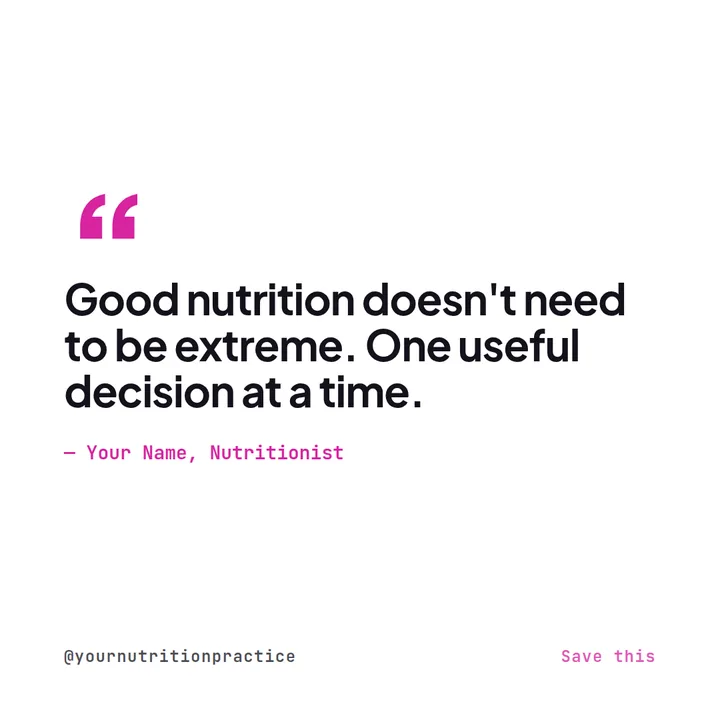
Good nutrition content doesn't need to be extreme. Be practical, specific, use credible sources and help your audience make one useful decision at a time.
Let Maxolot handle the drafting and design while you focus on clients.
This article is about marketing, not nutrition or medical advice. Example posts are general starting points; verify claims against current guidance and your professional standards.